
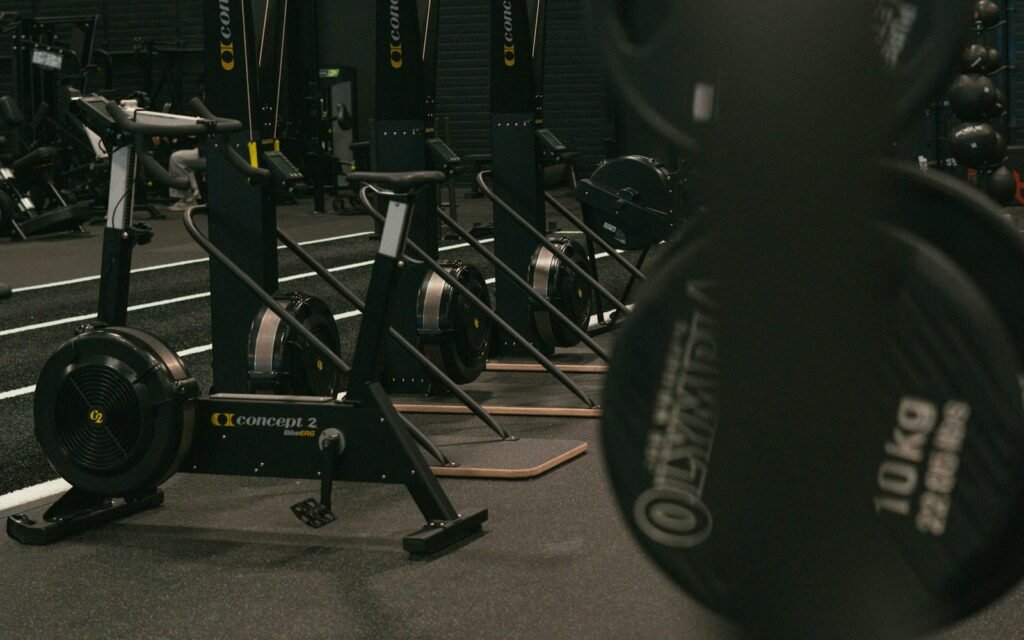
Rowing machines provide a unique cardio workout that combines endurance training with resistance exercise. Unlike many cardio machines that primarily focus on the lower body, rowing engages the legs, back, arms, and core.
Because rowing involves several muscle groups at once, even relatively short workouts can provide a challenging training session.
The Benefits of Rowing
One of the main advantages of rowing machines is their full-body movement. Each stroke involves pushing with the legs, stabilizing with the core, and pulling with the upper body.
Rowing can also improve cardiovascular endurance and muscular endurance. The movement is generally low impact because the user remains seated throughout the workout.
Choosing a Rowing Machine
There are several types of rowing machines, including air, magnetic, water, and hydraulic resistance models.
Air rowers are popular for their responsive resistance, while magnetic models tend to provide quieter workouts. Water rowers are designed to create a rowing sensation that closely resembles rowing on water.
When choosing a machine, consider the resistance system, rail length, seat comfort, noise level, storage requirements, and display features.
How to Row Correctly
Proper technique is important. A rowing stroke generally begins with the legs, followed by the body moving backward and finally the arms pulling the handle toward the torso.
Beginners should focus on controlled movements and good technique rather than trying to row as quickly as possible.
With regular training, a rowing machine can become an effective and efficient part of a home fitness routine.